- ✓Send your thank you email within 24 hours. Same day is better.
- ✓Generic emails are forgettable. Reference one specific thing from the conversation.
- ✓Four to six sentences is the right length. Not a second cover letter.
- ✓If you interviewed with multiple people, send separate emails to each.
- ✓AI can write a strong, specific thank you email in under 2 minutes if you give it the right inputs.
I sent thank you emails early in my career. Basic ones. The kind that say "thank you for your time, I really enjoyed learning about the role" and nothing else. I got one of those jobs. And for a while I told myself the email didn't matter because it clearly didn't stop me from getting hired.
What I figured out later is that the email was never just about the offer. It's about how you want to be seen from day one. You walk into the job already being the person who sends the polished, specific follow-up, or the person who sent something forgettable. The hiring manager remembers which one you were. And honestly, so do you.
You might never know if the email changed anything. Most people don't get explicit feedback on it. But the goal here isn't to game a hiring decision. It's to show up professionally in a moment where most people take the lazy route, and to use AI to make that easy enough that there's no excuse not to. A thank you email after an interview takes two minutes when you know what goes into it.
What a good thank you email actually includes
When to send it
Subject line formula
The 4 elements
Before and after: what the difference looks like
How to write a thank you email with AI
What if you interviewed with multiple people?
What mistakes should you avoid?
FAQ
Why the Thank You Email Matters (Even When You Already Have the Offer)
Here is the honest version: you probably can't measure whether a thank you email got you the job. Most candidates never find out. Recruiters rarely say "we went with you because of your follow-up note."
But that's the wrong way to think about it. According to a survey by TopInterview, 68% of hiring managers say a thank you email influences their decision. Only about 24% of candidates actually send one. That gap alone makes it worth doing. You're not competing against excellent candidates who all send polished follow-ups. You're mostly competing against people who don't send anything at all.
More importantly, the email signals something about how you work. It shows you follow through on small things. That you pay attention to details. That you don't treat the interview as the finish line. Those are exactly the qualities companies are trying to hire for, and you're demonstrating them before you've had a single day on the job.
What a Good Thank You Email Actually Includes
A strong thank you email after an interview has four components: an expression of gratitude, a specific reference to something from the conversation, a brief reinforcement of your fit, and a clear close. Here's how each one works.
When to send it
Within 24 hours. Same day if you can. The closer to the conversation, the more genuine it reads. After 48 hours, it starts to feel like an afterthought, which is the opposite of what you want. Block 15 minutes right after the interview while the conversation is still fresh in your head.
Subject line formula
Keep it simple and direct. Something like:
- Thank you, [Your Name]
- Thank you for the [Role Title] interview, [Your Name]
- Following up on our conversation, [Your Name]
Avoid being clever or vague. The interviewer has a full inbox. They need to know what the email is the moment they see it.
The 4 elements every thank you email needs
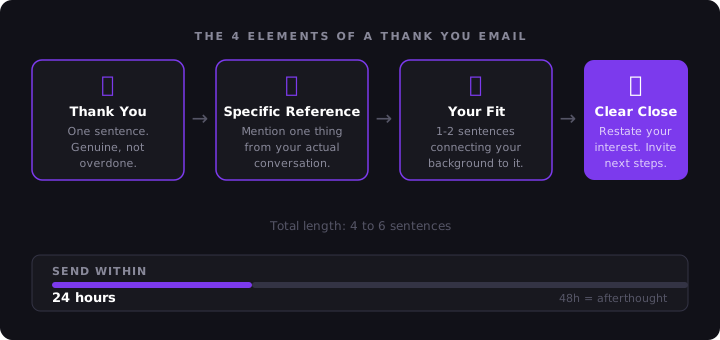
1. A genuine thank you. One sentence. Not three. "Thank you for taking the time to meet with me today" is enough. Don't overthink the opener.
2. A specific reference to the conversation. This is what separates a good email from a forgettable one. Mention something you discussed. A challenge they described, a project they referenced, a question you found particularly interesting. This proves you were actually present during the interview, not just going through the motions.
3. A brief reinforcement of your fit. One or two sentences that connect your experience to something they talked about. Not a full pitch, just a thread. "That's an area where I've spent the last two years" is more effective than three paragraphs restating your resume.
4. A clear close. Restate your interest in the role and invite next steps. "I'm genuinely excited about this opportunity and look forward to hearing from you" does the job.
Before and After: What the Difference Looks Like
Here's the same candidate, Sarah, a Project Manager who just interviewed for a Senior PM role at a SaaS company. The interview covered challenges around coordinating cross-team releases.
Hi Marcus,
Thank you so much for taking the time to meet with me today. I really enjoyed learning more about the role and the company. I'm very excited about this opportunity and hope to hear from you soon.
Best,
Sarah
Hi Marcus,
I appreciated our conversation today, especially the discussion about coordinating cross-team releases without a shared timeline. That's a problem I spent the last year solving, we went from missing every sprint deadline to a 94% on-time delivery rate by building a shared dependency board. I'd love to bring that approach to your team.
Looking forward to next steps.
Sarah
Same candidate. Same role. The second version takes 30 seconds longer to write but leaves a completely different impression. The interviewer now associates Sarah with a specific result, not a generic expression of excitement that every other candidate also sent.
How to Write a Thank You Email After an Interview with AI
This is where most people either skip the step entirely or spend too long staring at a blank screen. AI removes both problems. Give it the right inputs and it produces a draft in seconds that you can edit in another 60 seconds.
Here's the prompt I use. Paste it into ChatGPT or Claude after your interview:
Write a professional thank you email for me to send after a job interview. Here are the details:
Role I applied for: [job title]
Interviewer's name: [name]
Company name: [company]
One specific thing we discussed: [topic, challenge, or project they mentioned]
One relevant thing from my background that connects to it: [your experience or result]
Keep it short, 4 to 6 sentences. Professional but warm, not stiff. No filler phrases. End with a clear expression of interest and an invitation to next steps.
The key is the two fill-in fields in the middle. The specific conversation topic and your relevant background. If you skip those, you get a generic email. If you fill them in, you get something that reads like you actually paid attention.
Read the output before you send. Change anything that doesn't sound like you. Add a detail the AI couldn't know. That's it.
If you want a complete system for every stage of the interview process, from prep to follow-up, the Interview Mastery System has 18 done-for-you prompts that cover the full sequence.
What If You Interviewed with Multiple People?
Send a separate email to each interviewer. Do not CC everyone on one note. Panel interviews are common, and each person who gave you their time deserves an individual message, not a group reply they're copied on.
Each person gave you their time. Each one deserves a direct message. The core can be the same, but change at least one specific detail per email. Reference something from your conversation with that specific person. It takes an extra few minutes but it matters, especially at companies where hiring decisions involve multiple stakeholders.
If you don't have every interviewer's email, it's fine to ask your main contact: "Would it be appropriate to send a thank you note to the other team members I spoke with? If so, could you share their email addresses?"
What Mistakes Should You Avoid in a Thank You Email?
Most thank you email mistakes come from two places: waiting too long to send it, or writing something so generic it could have been sent by anyone. Here are the five worth watching for.
- Sending it too late. After 48 hours, the window has passed. Block the time right after the interview.
- Writing too much. A thank you email is not a second cover letter. Four to six sentences. If you're writing paragraphs, cut it.
- Being too generic. "I enjoyed learning about the company" tells them nothing. Pick one specific moment from the conversation and reference it.
- Skipping it entirely. This is the most common mistake. Most people don't send anything. Sending even a decent email puts you ahead of most of the field.
- Not proofreading. One typo in a 5-sentence email is hard to overlook. Read it twice before sending.
Prepare for every stage of the interview
The Interview Mastery System has 18 AI prompts covering prep, performance, follow-up, and offer negotiation. One system, every stage.
Get the Interview Mastery SystemFrequently Asked Questions
Within 24 hours of the interview. Same day is better if you can manage it. The closer to the conversation, the more genuine it reads. After 48 hours, it starts to feel like an afterthought.
Yes. The email is not just for your chances, it sets the tone for how you show up professionally. The people you interviewed with are often the people you'll work with. A good first impression extends past the offer.
Short. Four to six sentences is the right length. Express appreciation, reference one specific moment from the conversation, briefly restate your interest, and close. Anything longer starts to look like a second cover letter.
Keep it simple and clear: "Thank you, [Your Name]" or "Following up on our conversation, [Your Name]". You can also reference the role: "Thank you for the Senior PM interview". Avoid creative subject lines. The interviewer has a full inbox and wants to know what the email is about immediately.
Yes, send separate emails to each interviewer. Do not CC everyone on one email. Each person gave you their time, so each one deserves a direct note. Keep the core message the same but change at least one specific detail per email to reference something personal from each conversation.