- Most interview failures are not about knowledge gaps. They're about candidates who didn't trust themselves walking in.
- Nerves come from two sources: not knowing what they'll ask, and not knowing your own story well enough. AI closes both.
- The night before, use AI to extract and pressure-test your 3 strongest professional stories. Stop guessing what your best moments are.
- Run one brutal mock interview before you leave. Being challenged the night before is far better than being surprised on the day.
- A 30-minute morning routine with AI is enough to shift from anxious to ready. You don't need to cram. You need to reset.
I've thought about this a lot. Not the interview I got wrong, but what actually went wrong. There's a version of that story in the other article I wrote about interview prep, so I won't retell it here. But the short version: I walked into my first marketing interview completely unprepared, froze on the simplest question, and spent months rebuilding confidence I didn't need to lose.
What I've realised since is that the preparation I was missing wasn't really about facts. It was about trust. I didn't trust that I knew what they'd ask. I didn't trust that my experience was worth anything. I didn't trust my own story. All three hit me at once, and I had no answer to any of them.
AI can't fix nerves entirely. But it can close the two gaps that cause most of them: the uncertainty about what's coming, and the uncertainty about your own story. Most standard Indeed advice covers the logistics of preparation, but not this part. When both of those gaps are gone, you stop feeling like an imposter and start feeling like a prepared candidate. That's a different energy entirely, and interviewers feel it.
Here's the system I'd have used if I had these tools back then.
Why Do Technically Prepared Candidates Still Bomb Interviews?
There's a version of interview failure that nobody talks about. It's not the candidate who didn't study. It's the one who did everything right. They researched the company, they knew the job description, they had answers prepared. And they still bombed.
It happens because preparation and confidence are not the same thing. You can know the right answer and still deliver it badly when you're anxious. You can have a great story and completely blank when you're asked to tell it under pressure. Technical preparation fills your head. Confidence is about trusting that what's in your head will come out clearly when the moment arrives.
The gap usually comes from one of three places:
- They prepared generic answers but didn't connect them to their actual experience
- They didn't know which of their stories was strongest, so they'd grab the wrong one under pressure
- They had no idea which questions would hit hardest, so every question felt like a potential ambush
AI addresses all three directly. Not by doing the interview for you. By removing the unknowns that make your own head work against you.
The night before: know your own story cold
Most people spend the night before an interview re-reading the job description. That's not useless, but it's not where the confidence comes from. Confidence comes from knowing exactly what you're going to say when they ask "tell me about a time you..."
The problem is most people can't answer that without some version of "uh, let me think." Not because the experience isn't there. It's there. They just haven't extracted it, named it, and turned it into something they can say clearly under pressure.
This prompt fixes that:
Prompt: Find Your 3 Strongest Stories
Help me identify my 3 strongest professional stories. Here's my background: [paste a short summary of your experience, roles, and key projects]. For each story, extract: the specific result I achieved, what made it genuinely hard, and what it says about how I work. Be direct. Don't flatter me. Tell me which stories are most compelling to a hiring manager and why.
What you get back is a clear read on which experiences are actually worth telling. Not the ones you've always defaulted to. The ones that land. Once you have those three stories named and understood, you can map them to almost any behavioral question they throw at you. You stop improvising. You're choosing from a short list you already trust.
Go through each story once out loud. You don't need to memorise a script. You need the arc to feel natural in your mouth. That's what makes it sound real rather than rehearsed.
What Will Your Interviewer Actually Ask You?
The other thing that creates pre-interview anxiety is not knowing what's coming. Every silence, every pause, feels like it could be hiding a question you're not ready for.
You can close a lot of that gap quickly. For the full system on question prediction and mock prep, the ChatGPT interview prep article covers it in detail. But if you want a fast version specifically for the questions most likely to trip you up, this prompt works well:
Prompt: The Questions You'll Blank On
I have an interview for [role] at [company]. Here's the job description: [paste]. What are the 5 questions I'm most likely to blank on, and why? Don't give me the easy ones. Give me the ones where my background has a gap, or where the answer requires genuine self-awareness. For each one, tell me what a strong answer looks like.
This is not about memorising answers. It's about not being surprised. When you know which questions are coming for you specifically, none of them feel like ambushes anymore.
The morning of: the 30-minute reset
Most people use the morning of an interview to panic more efficiently. They re-read their notes, scroll LinkedIn, rehearse answers in the shower. The problem is cramming at that point doesn't help. You already know what you know. What you need is to shift your mental state.
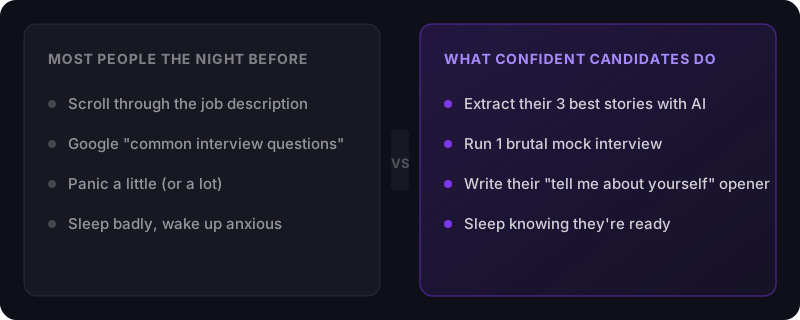
This is the prompt I'd use 30 minutes before walking in:
Prompt: Morning of Interview Reset
I have a job interview in 30 minutes for [role] at [company]. I'm feeling nervous about [describe the specific thing: e.g. a gap in my experience / a question about leadership / explaining why I left my last job]. Help me reframe this as a prepared candidate, not an imposter. Then give me the one sentence to open my "tell me about yourself" with. Make it specific to my background: [2-3 sentence summary of your experience].
The reframe matters because anxious brains catastrophise. They turn "I'm a bit uncertain about that one question" into "I'm completely unqualified and they're going to find me out." AI can't stop nerves, but it can interrupt that spiral with something grounded. And having your opener locked down removes the one thing that makes the first 60 seconds unnecessarily hard.
How to Build Real Confidence With One Brutal Mock Interview
This is the one most people skip because it's uncomfortable. And it's the one that makes the biggest difference.
Running a kind mock is almost useless. If you practice with a friend who softens their follow-ups and nods along, you leave feeling good but you haven't actually prepared for what an interview feels like. Real interviewers probe. They push back. They stay neutral when you're hoping for a sign.
This prompt is intentionally uncomfortable:
Prompt: The Brutal Mock
Act as a senior hiring manager interviewing me for [role]. Ask me the one question I'm most nervous about based on this job description: [paste]. When I answer, don't be kind. Tell me exactly what a real interviewer would think: what landed, what sounded vague, what they'd follow up on, and whether the answer would move me forward or hold me back. Then ask the follow-up they'd actually ask.
Go through this once. Answer out loud, or type it as you'd say it. Then read the feedback. It will sting a little. That's the point. Being challenged the night before is far better than being surprised on the day.
When you walk in having already survived the hardest version of that question, the real thing doesn't feel as threatening. That's what confidence actually is: not the absence of nerves, but the knowledge that you've already handled the worst case.
Want a complete interview confidence system already built for you?
The AI Job Search System includes every prompt in this article plus a full prep system: question prediction, STAR story builder, mock interview sequence, and salary negotiation scripts. Copy, paste, walk in ready.
Get the SystemFrequently asked questions
No. Using AI to prepare is no different from hiring an interview coach, doing mock interviews with a friend, or reading a book on how to answer behavioral questions. You still have to show up and perform. AI just helps you stop walking in blind.
It happens to everyone. The best thing you can do is say "Let me think about that for a second" and take a breath. If you've done the prep, something will come. If you've done zero prep, you'll stay blank. The morning-of reset and mock interview are specifically designed to reduce the chance of blanking on your core stories.
Use it to reframe your nerves, sharpen your opener, and run one final mock question. The goal is not to cram more facts. It's to shift from anxious to prepared. The prompt in this article gives you a 30-minute morning routine that covers all three.
Yes, but not in the way a therapist would. AI helps with the two biggest sources of nerves: not knowing what they'll ask, and not trusting your own story. Once you've closed both gaps with preparation, nerves drop significantly. The reframing prompt in this article is designed for exactly that moment when anxiety spikes.
Regular interview prep focuses on what to say. This focuses on how you feel walking in. The difference is that technically prepared candidates still bomb interviews when they don't trust themselves. This approach addresses the mental side: knowing your story cold, anticipating the hardest questions, and doing a brutal mock so nothing surprises you on the day.